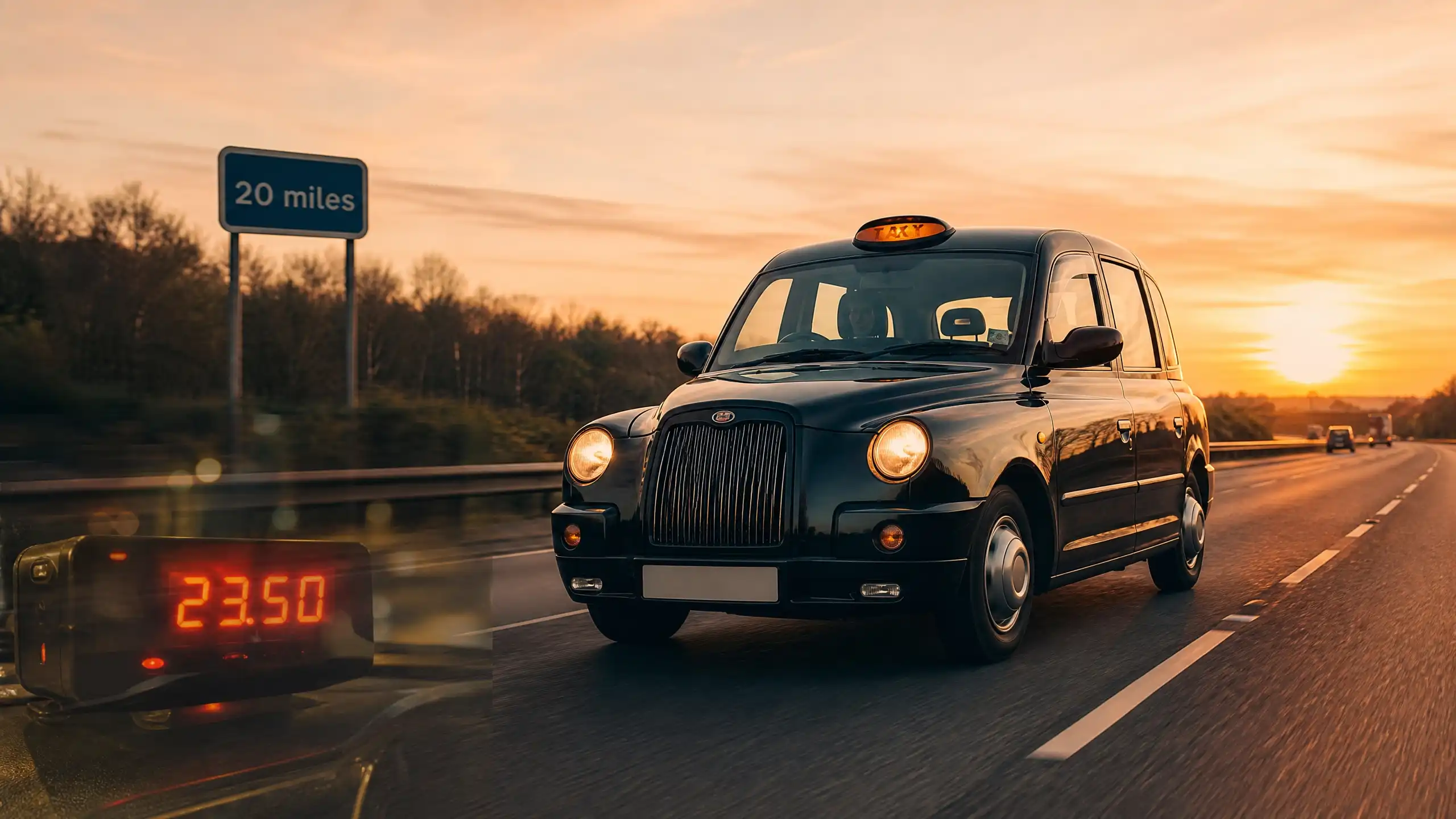
A 20-mile taxi ride sounds simple to price, but the final fare can change by £30, £50 or even more depending on where you travel and when you set off.
There is no single UK-wide taxi rate. Local councils set or approve fares for licensed taxis in their area, while private-hire companies usually provide their own pre-booked prices. This means a 20-mile journey in Belfast, Manchester and London can produce three very different quotes.
For most passengers, £40 to £80 is a sensible daytime planning range. In Manchester, the published meter tariff produces an estimated fare of about £55.20 during the day and £73 at night, before waiting time and permitted extras. However, many 20-mile journeys from Manchester count as out-of-area trips, so the driver and passenger may need to agree a price before travelling.
TL;DR
A 20-mile taxi journey in the UK usually costs around £40 to £80 during the day. In Manchester, the estimated metered fare is about £55.20 by day and £73 at night, before traffic, airport fees or other extras. For the most accurate price, compare fixed quotes from licensed taxi or private-hire operators before booking.
How much does a 20-mile taxi cost in the UK?
A 20-mile taxi in the UK will usually cost between £40 and £80 during standard daytime hours. Night journeys, airport trips, London black cabs and larger vehicles may cost £60 to £100 or more.
Twenty miles equals about 32.2 kilometres, so this is normally treated as a medium-to-long taxi journey rather than a short local trip. At this distance, the price depends less on the starting charge and more on the mileage rate, journey time and whether the destination sits outside the driver’s regulated area.
The following figures provide a practical planning guide rather than a guaranteed quote:
| Journey type | Likely 20-mile cost |
|---|---|
| Lower-cost regional daytime taxi | £40–£55 |
| Typical regional daytime taxi | £50–£70 |
| Manchester metered daytime benchmark | About £55.20 |
| Manchester metered night benchmark | About £73 |
| Pre-booked private-hire journey | About £40–£75 |
| Night, weekend or bank holiday journey | About £60–£100 |
| London black cab or congested city journey | Often £80–£120+ |
| Executive, airport or larger vehicle | About £70–£130+ |
These ranges overlap because taxi pricing is local. Northern Ireland’s published weekday daytime tariff, for example, charges £4.40 for the first mile and £1.86 for each additional mile. A traffic-free 20-mile calculation based on that rate comes to approximately £39.74 before waiting time or extras.
London sits at the higher end. Transport for London currently estimates that even a six-mile black-cab journey can cost around £33 to £42, while a journey between Heathrow and central London may cost £70 to £120. Time spent in slow traffic affects the meter, so distance alone cannot predict the final London fare.
What would a 20-mile taxi cost in Manchester?
A 20-mile Manchester taxi would produce an estimated metered fare of £55.20 by day or £73 at night, provided the standard Manchester tariff applies throughout the journey and there is no waiting time.
Manchester City Council’s current published daytime tariff runs from 6am to 10pm. It charges £3.40 for the first 348.44 metres, followed by 20p for every additional 123 metres or part of that distance.
The calculation for a traffic-free 20-mile journey is:
Part of the fare | Daytime calculation |
| First 348.44 metres | £3.40 |
| Remaining distance units | 259 |
| Price of remaining units | 259 × £0.20 |
| Estimated meter total | £55.20 |
The night tariff runs from 10pm to 6am and also applies throughout bank holidays. It starts at £3.80 for the first 210.67 metres, followed by 20p for each further 92.5 metres or part of that distance. That produces an estimated 20-mile total of £73 before delays or extras.
Most 20-mile Manchester trips need an agreed fare
A metered calculation is useful as a benchmark, but it may not be the price you actually pay.
Manchester’s regulated meter fare applies to journeys that start inside the City of Manchester and finish no more than four miles beyond the city boundary while remaining within Greater Manchester. Trips beyond that area are classed as out-of-area journeys.
The driver does not have to use the meter for an out-of-area trip. Manchester City Council says the fare should be agreed before travel begins and notes that drivers commonly quote the expected meter fare plus one-third.
Using that practice as a rough illustration:
- A £55.20 daytime meter benchmark plus one-third is about £73.60.
- A £73 night benchmark plus one-third is about £97.33.
- The driver may offer a different fixed price based on the route and return journey.
- The agreed figure should be confirmed before the vehicle moves.
These figures are not official fixed fares. They show why a Manchester passenger may receive a quote closer to £75 or £100 for a 20-mile journey that leaves the regulated area.
Why can two 20-mile journeys have different prices?
Two journeys covering the same distance can cost different amounts because a taxi meter measures both distance and time.
A clear 20-mile motorway journey may take 30 minutes, while a 20-mile urban journey during rush hour may take more than an hour. When the taxi slows or stops, waiting-time charges can replace or add to the normal distance calculation.
The biggest price factors are:
- Location: Each council area may publish a different tariff.
- Travel time: Night, weekend and holiday rates are often higher.
- Traffic: Slow traffic keeps the meter running for longer.
- Booking type: A metered taxi and a fixed-price private hire may charge differently.
Vehicle size also matters. A standard saloon may be cheaper than a six-seater, eight-seater, wheelchair-accessible vehicle or executive car because larger vehicles cost more to buy, operate and fuel.
How are UK taxi fares calculated?
A taxi fare normally combines a starting charge, a distance rate and a waiting-time rate. The exact amounts come from the local tariff that applies to the licensed vehicle.
The starting charge begins the fare
The starting charge, sometimes called the flag fall, is the amount shown when the taximeter begins.
It normally covers a short initial distance or time period. In Manchester, the daytime starting charge is £3.40 and the night starting charge is £3.80. London currently has a minimum black-cab fare of £4.40.
On a 20-mile journey, the starting charge represents only a small part of the bill. The repeated mileage units make up most of the price.
The distance rate adds mileage to the meter
After the initial distance, the meter adds small units to the fare.
Manchester adds 20p for each additional 123 metres during the day. At night, it adds 20p for each additional 92.5 metres. The shorter night-time unit causes the fare to rise faster, which is why the estimated 20-mile cost moves from £55.20 to £73.
Waiting time increases the fare in slow traffic
Waiting time is the charge applied when the vehicle is stationary or travelling below the meter’s distance threshold.
Manchester’s daytime meter adds 20p for every 31.57 seconds of waiting time. The night meter adds 20p for every 23.84 seconds. Ten minutes of charged daytime waiting could therefore add roughly £3.80, while ten minutes at night could add around £5.20.
The exact meter behaviour depends on speed and calibration, so passengers should treat these figures as illustrations rather than separate guaranteed charges.
Should you choose a black cab, minicab or app-based service?
Choose a black cab when you need immediate street pickup, but compare private-hire quotes when you can book ahead.
A hackney carriage, often called a taxi or black cab, can be hailed in the street, taken from a rank or booked in advance. Its fare normally follows a council-approved taximeter within the regulated area.
A private-hire vehicle, also called a minicab, must be booked through a licensed operator before pickup. It cannot legally accept an unbooked street passenger.
An app-based journey is usually a form of private hire. The app provides a price or estimate based on the route, current demand, vehicle type and available drivers.
For a 20-mile journey, a pre-booked private-hire quote often gives better price certainty because you can see or agree the amount before leaving. A metered taxi may work well on a clear route but become more expensive when traffic adds waiting time.
In Manchester, private-hire vehicles must display an approved fare card, and passengers are advised to check the cost before the journey starts.
What extra charges can increase a 20-mile fare?
Extra charges are costs added for a permitted service, location or incident that is not fully covered by the basic distance calculation.
Manchester City Council currently allows several clearly listed extras. These include 20p for each passenger in addition to the hirer, a 60p Piccadilly Station barrier charge and certain Manchester Airport barrier charges.
Published Manchester Airport taxi extras include:
- 60p for pickup at the Airport Rail Link barrier.
- £3 for drop-off at an airport terminal.
- £1.80 for pickup at an airport terminal.
- £50 when a passenger soils the vehicle and cleaning is required.
The driver cannot add an extra debit or credit card payment charge to a Manchester fare.
Other parts of the UK may permit different airport fees, booking charges, tolls or cleaning costs. Ask whether the quote includes all extras, particularly when travelling to an airport, crossing a toll route or booking a larger vehicle.
How much more does a taxi cost at night?
A 20-mile night taxi may cost 20% to 40% more than a daytime journey, although the increase depends on the local tariff.
In Manchester, the traffic-free calculation rises from £55.20 during the day to £73 at night. That is an increase of £17.80, or just over 32%.
The normal Manchester night tariff applies from 10pm until 6am and throughout bank holidays. A higher Christmas and New Year tariff applies during specified periods, when the night rate increases by 50%.
A journey that would cost £73 at the standard night rate could therefore reach about £109.50 during the higher festive tariff, before waiting time or other charges.
How long does a 20-mile taxi journey take?
A 20-mile taxi ride usually takes 30 to 60 minutes, but an urban Manchester route can take longer during busy periods.
A clear motorway or dual-carriageway journey may take 25 to 35 minutes. A mixed route through town centres, local roads and junctions may take 40 to 60 minutes. Heavy traffic, football fixtures, roadworks or airport queues can push the journey beyond an hour.
Time matters because:
- Faster roads reduce meter waiting time.
- City-centre congestion can raise a metered fare.
- Airport queues may add waiting or parking charges.
- A fixed quote may protect the passenger from traffic-related price rises.
Check the estimated journey time shortly before departure. A route that takes 35 minutes at midday may take 70 minutes during the weekday evening peak.
How can you get an accurate quote before booking?
The most accurate price comes from giving a licensed operator the full journey details, not simply asking for a 20-mile rate.
Provide the exact pickup postcode, destination postcode, travel date, pickup time, passenger number, luggage amount and required vehicle size. These details tell the operator whether the journey crosses a licensing boundary, enters an airport charging area or needs a larger car.
Use this four-step process:
- Request quotes from at least two licensed operators.
- Ask whether the price is fixed or based on the meter.
- Confirm whether airport fees, tolls and waiting time are included.
- Keep the booking message or email showing the agreed price.
A quote that is £5 cheaper may not be better if it excludes a £6 airport charge or starts charging waiting time immediately. Compare the final expected cost rather than the headline fare.
How can you pay less for a 20-mile taxi?
Pre-booking and comparing fixed quotes are usually the most practical ways to reduce a 20-mile taxi cost.
Book before a busy Friday or Saturday night because fewer available vehicles can limit your options. Travelling before a night tariff begins may also save money when your schedule is flexible.
For group travel, divide the total fare by the number of passengers. A £72 six-seater shared by six people costs £12 each, which may compare well with separate public transport tickets and station transfers.
You can also reduce the fare by choosing a simple pickup point, avoiding paid airport pickup zones where practical and being ready when the driver arrives. These steps reduce waiting, parking and access charges.
Frequently asked questions about 20-mile taxi prices
Q:1 Is £50 expensive for a 20-mile taxi in the UK?
£50 is a reasonable daytime price for a 20-mile taxi in many UK areas. It equals £2.50 per mile and sits close to the calculated Manchester daytime meter benchmark of £55.20. A £50 fixed quote may be particularly competitive when it includes traffic delays, booking fees and all passengers.
Q:2 Is Uber cheaper than a taxi for 20 miles?
Uber may be cheaper than a metered taxi when demand is low, but it can become more expensive when app pricing rises. Compare the live app price with a local private-hire quote and the expected taxi meter fare. Check the vehicle class as well, because UberXL and executive options cost more than a standard car.
Q:3 Can a taxi driver charge a fixed fare for 20 miles?
A taxi driver can agree a fixed fare when local rules permit it, particularly for an out-of-area journey. In Manchester, journeys finishing more than four miles beyond the city boundary may be agreed before travel rather than charged on the meter. Confirm the full price before departure and keep a written record where possible.
Q:4 Does a taxi meter keep running in traffic?
Yes, a taxi meter can continue increasing when the vehicle stops or travels slowly. The meter switches between distance and waiting-time measurements according to its calibration. Manchester’s published daytime waiting unit is 20p per 31.57 seconds, so congestion can add several pounds to a long urban journey.
Q:5 Do taxis cost more on Sundays and bank holidays?
Taxis often cost more on Sundays or bank holidays, but the rule differs between licensing areas. Manchester applies its night rate throughout bank holidays. Northern Ireland uses separate weekday, evening, weekend and named-holiday rates. Check the tariff card or request a fixed quote before travelling.
Q:6 Is a private-hire vehicle the same as a taxi?
A private-hire vehicle is not legally the same as a taxi. A taxi can usually be hailed in the street or taken from a rank, while a private-hire vehicle must be booked through a licensed operator. Both carry paying passengers, but their booking rules, fare systems and vehicle markings may differ.
Q:7 Can a taxi charge extra for card payment in Manchester?
No extra debit or credit card payment charge should be added to a Manchester taxi or private-hire fare. Manchester City Council states that drivers cannot add an additional card fee. The amount paid by card should therefore match the permitted meter fare or the price agreed before the journey.
Agree the full fare before starting a 20-mile journey
A 20-mile taxi in the UK will normally cost around £40 to £80 by day, with higher prices likely at night, during holidays, in London or when the journey leaves the driver’s regulated area.
For Manchester passengers, £55.20 by day and £73 at night provide useful meter-based benchmarks. An out-of-area quote may be higher, and the council notes that meter fare plus one-third is commonly used as a starting point for these journeys.
Before booking, compare at least two quotes, ask whether the price is fixed and confirm every airport, toll, waiting-time or vehicle charge. A two-minute price check before travel can prevent a £20 or £30 surprise when you reach your destination.