Book a vehicle that matches the wheelchair, passenger count, luggage, and level of assistance before the journey starts. Transfers 247 confirms the accessible vehicle in advance, agrees the price, and gives the driver the details needed for a safer, calmer pickup.
Tell us your journey details and we will confirm the right vehicle.
Prefer to speak with the booking team? Call +44 161 410 9595
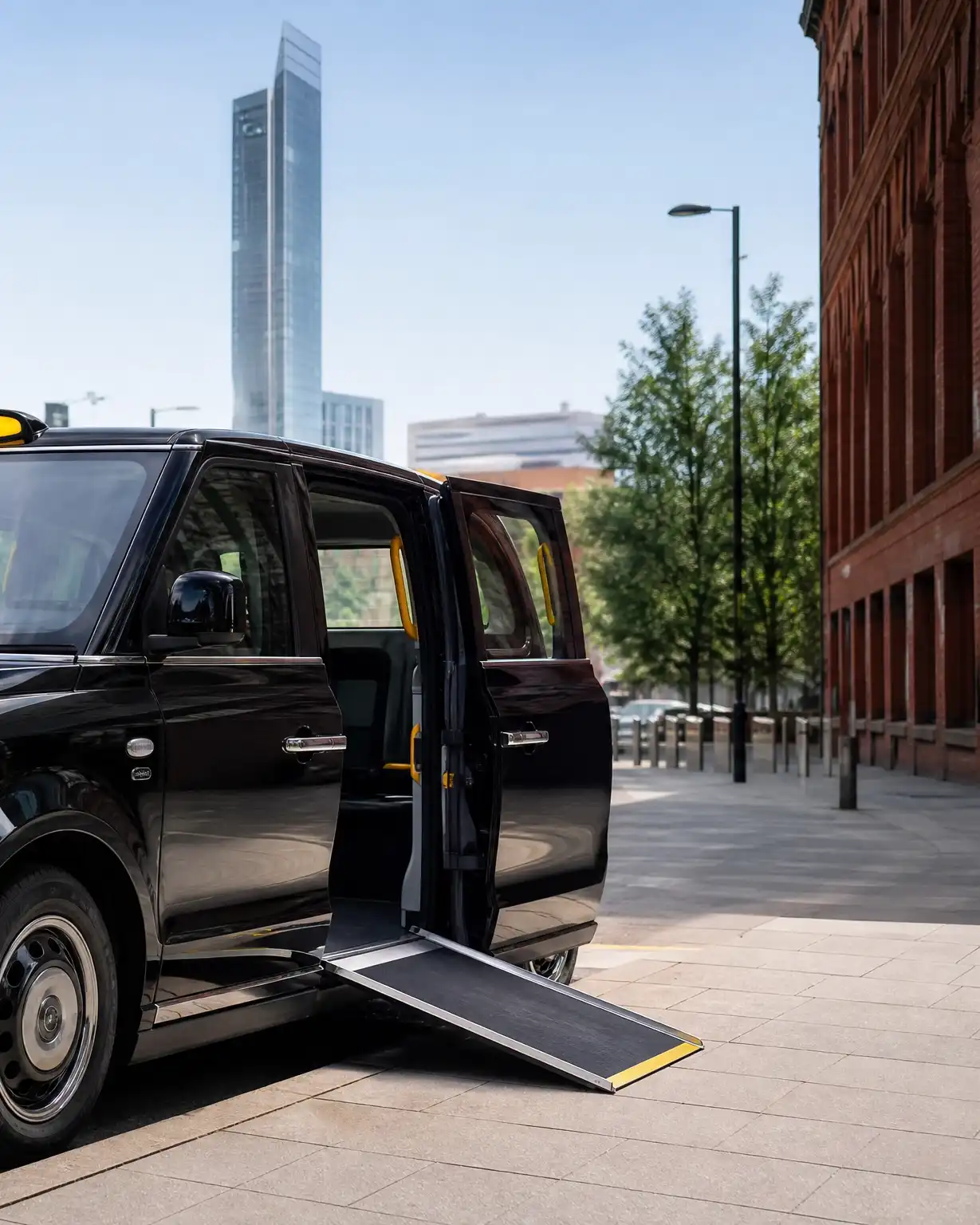
A wheelchair accessible taxi is a licensed taxi or private hire vehicle adapted so a passenger can enter, ride, and leave while seated in a wheelchair. It is also called a WAV, which stands for Wheelchair Accessible Vehicle.
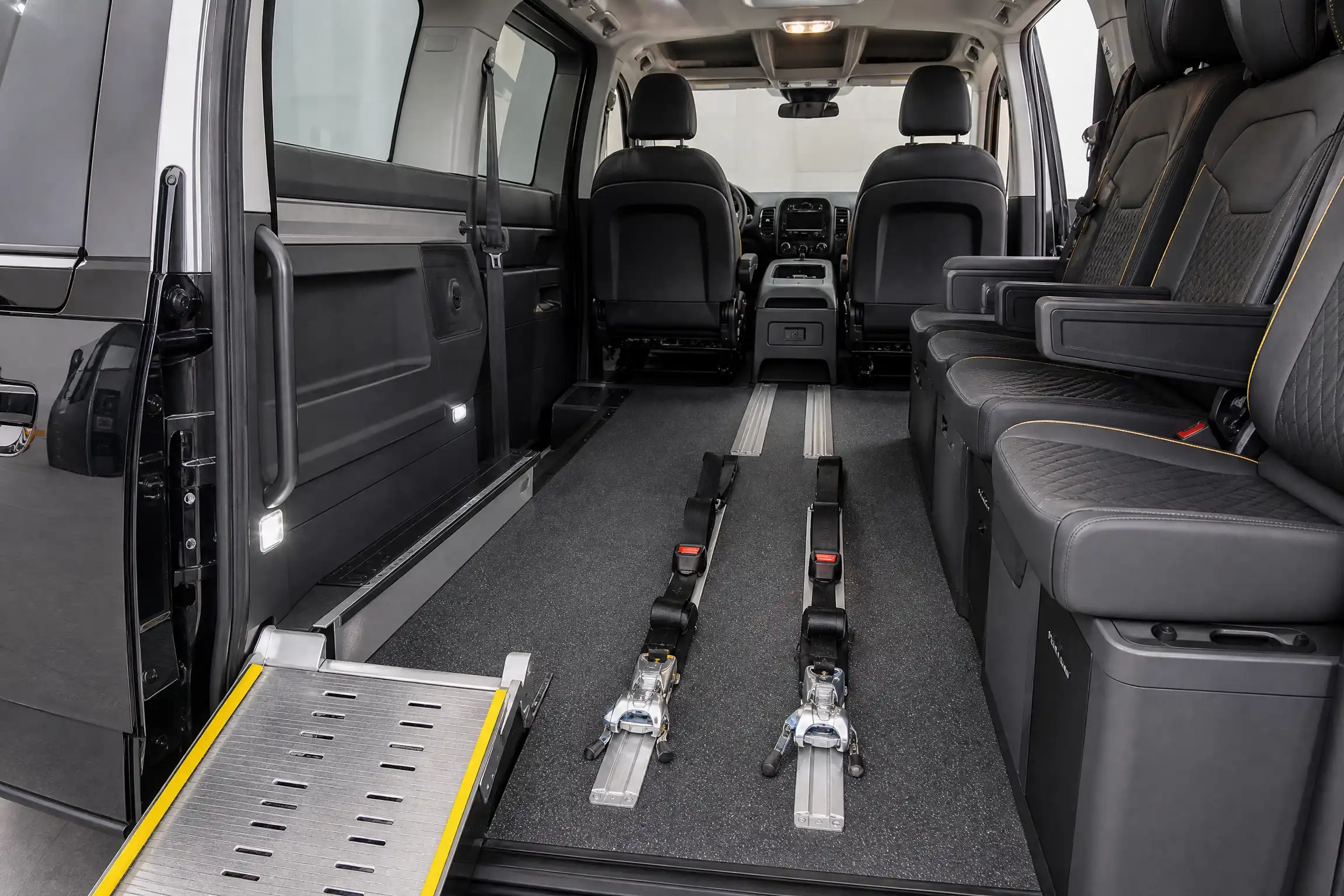
A standard saloon usually requires the passenger to transfer into a fixed seat and place a folding chair in the boot. A WAV has a wide entry point, a ramp or passenger lift, a clear wheelchair space, floor anchorages, and separate restraints for the wheelchair and the person.
This service is not limited to full-time wheelchair users. It can also help people traveling with a powered chair, mobility scooter, walking frame, rollator, transfer board, assistance dog, medical equipment, or a carer. It also suits older passengers and people recovering from surgery who cannot manage a high step into a standard car.
Transfers 247 treats the vehicle match as part of the booking, not as a last-minute request. The booking team asks what the passenger uses, whether they remain in the chair, and how many people and bags must travel.
That detail matters because a vehicle described as "accessible" may fit one manual chair but not a large powerchair or mobility scooter.
The Department for Transport uses a reference wheelchair measuring 700 mm wide, 1,200 mm long, and 1,350 mm high when advising local licensing authorities about designated wheelchair-accessible vehicles. The government also notes that a designated vehicle may carry some wheelchair types but not every powered chair or scooter, which is why an exact fit check still matters.
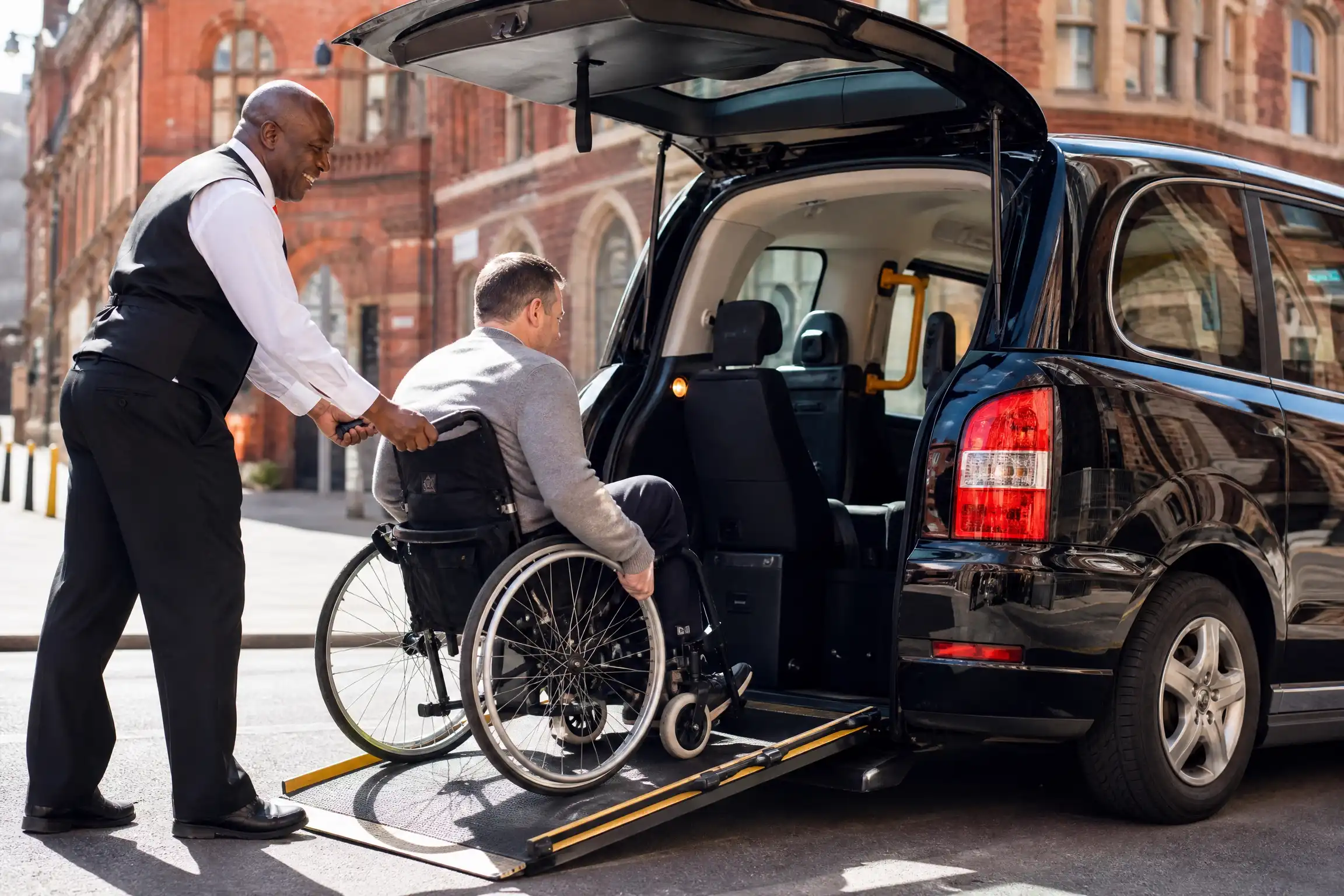
The right WAV gives the driver enough room to board the passenger, position the chair in the approved direction, attach the restraints, and leave clear space around the user.
A ramp works well when the vehicle has a lowered floor and the chair can move safely up the incline. A manual ramp folds out by hand, while a powered ramp deploys electrically.
Some local taxi specifications use a forward-facing wheelchair space of at least 1,130 mm long, 690 mm wide, and 1,340 mm high. Current Department for Transport guidance uses the larger 700 mm × 1,200 mm × 1,350 mm reference wheelchair when councils decide which vehicles to designate. These figures are useful screening points, not proof that every chair will fit.
Many WAV layouts keep one or more companion seats within the passenger area. This helps a carer stay close, communicate with the passenger, and manage permitted medical items during the trip.
A common forward-facing setup uses four tie-down points attached to suitable parts of the wheelchair frame and anchored to the vehicle floor. The passenger then uses a separate occupant restraint, such as a lap-and-shoulder belt.
Before the vehicle moves, the driver should:
If anything feels loose or unfinished, ask the driver to stop and check it before setting off.
Transfers 247 plans accessible transport around the person's real mobility needs, not a single passenger label.
Manual wheelchair users may remain in the chair or transfer into a passenger seat, depending on preference, chair design, and vehicle space.
Powered wheelchair and powerchair users need a closer fit check because batteries, headrests, footplates, tilt systems, and chair weight can affect the entry method and restraint position.
Mobility scooter users may travel in a suitable WAV when the scooter dimensions, weight, stability, and manufacturer guidance allow safe transport. Some users may need to transfer to a fixed passenger seat.
Passengers with temporary mobility limits may need a low step, ramp, swivel seat, extra boarding time, or room for crutches, a walker, or a folding chair after surgery.
Older passengers often book an accessible vehicle because they cannot climb into a saloon safely, even when they do not use a wheelchair every day.
Carers and family members can book on behalf of the passenger and travel with them. The booking should state who will meet the driver, who can answer access questions, and whether the passenger needs collection from a care home or hospital entrance.
From hospital appointments to long-distance travel — every journey type is planned around the passenger's actual access needs.
A planned hospital transfer reduces the risk of a missed appointment caused by an unsuitable vehicle. Tell Transfers 247 the clinic name, entrance, appointment time, chair type, passenger transfer choice, and whether the return time is fixed or open. For hospital discharge, share the ward's likely release window and a contact number for updates.
A WAV airport transfer must account for the wheelchair, companions, suitcases, terminal instructions, and the time needed to board safely. Transfers 247 can track the flight number for airport collections and plan travel to Manchester Airport, Heathrow, Gatwick, London City Airport, and other UK airports. Airport meeting points and access rules vary, so the confirmed booking should state where the driver will meet the passenger.
Accessible school travel works best with a repeatable plan. The operator needs the student's chair details, pickup contact, school entrance, escort needs, safeguarding instructions, and any handover rules. Recurring bookings also let the same accessibility notes stay attached to each journey.
Dialysis, chemotherapy, physiotherapy, and other repeat appointments often run at the same time each week. A standing booking can reduce repeated calls and keep the chair, carer, collection point, and return instructions consistent. Build in enough time for treatment delays rather than setting an unrealistic pickup minute.
Accessible travel should not stop at medical trips. Transfers 247 can plan transport for weddings, funerals, family visits, concerts, exhibitions, meals, football matches, and days out. Venue access, crowds, road closures, and late finishes can affect the best drop-off and collection point.
A long-distance wheelchair taxi offers one vehicle, one agreed route, and door-to-door travel without rail changes. It suits cross-city hospital care, family visits, relocations, holiday travel, cruise ports, and journeys between Manchester and London. Longer trips need extra thought about comfort breaks, medication timing, charging needs, and luggage.
Day hire works when the passenger needs several stops, waiting time, or a flexible return. One planned driver already knows the chair and boarding process, which avoids explaining the same access needs to a different operator after every appointment.
The problem is rarely the distance. It is the uncertainty around the vehicle, driver, equipment, and price.
Accessible vehicles are less common than standard cars, so a generic app booking may fail when no suitable driver accepts it.
Transfers 247: The journey is pre-booked as an accessible job, with the chair and passenger details attached. The vehicle type is confirmed rather than assumed.
A ramp alone does not make a safe booking. The chair may be too wide, too heavy, too low at the footplates, or unsuitable for the available restraint points.
Transfers 247: The booking team asks for dimensions, combined weight, transfer choice, and equipment before dispatch. The driver receives the access notes before arrival.
"Wheelchair friendly" can mean there is space for a folded chair, not an occupied powered wheelchair.
Transfers 247: The passenger states whether they remain seated in the chair. Transfers 247 then confirms an occupied-chair WAV rather than sending a standard MPV.
Rideshare pricing may change by demand, traffic, or driver supply, which makes an important hospital or airport journey harder to budget.
Transfers 247: The fare is agreed before booking, including the route and stated accessibility needs. Transfers 247 publishes fixed-price booking as part of its service model.
Four steps. Completed before the driver sets off.
State whether the chair is manual, powered, folding, rigid-frame, tilt-in-space, bariatric, or a mobility scooter. Give the full length, width, height, chair weight, and estimated combined weight of the chair and user.
Count the wheelchair user, carers, family members, children, escorts, and assistance dog. Add the number and size of suitcases, walking aids, and medical items.
Transfers 247 matches the booking details to an available WAV, confirms the access method, and gives the fare before the journey. Any extra stop, waiting arrangement, airport pickup, or day-hire period should appear in the confirmation.
The driver arrives with the confirmed ramp or lift ready for use and the access notes already supplied. Before moving, the driver boards the passenger, positions the chair, fits the restraint system, and checks that everyone is settled.
Good booking information prevents the two most common failures: the wrong vehicle and too little space.
Send the following details in one message or booking form:
A photo of the wheelchair from the side can help when dimensions alone do not show long footplates, rear equipment, or unusual frame points.
Do not send medical records. The booking team needs practical transport information, not a diagnosis.
Transfers 247 is based in Old Trafford and serves Manchester, Greater Manchester, London routes, major airports, stations, and long-distance journeys across the UK. The company's published service areas include local, regional, airport, and nationwide travel.
Book pickups in Manchester city centre, Old Trafford, Stretford, Salford, Stockport, Didsbury, Altrincham, Wythenshawe, Trafford, and surrounding Greater Manchester postcodes. Availability depends on the required WAV size and the notice given.
Transfers 247 can plan London journeys and airport transfers for Heathrow, Gatwick, and London City Airport. A pre-booked private hire WAV must be requested as accessible. Passengers should not assume every London minicab can carry an occupied wheelchair. London's licensed black cabs follow separate TfL accessibility rules.
For Manchester Airport, send the airline, flight number, terminal if known, wheelchair dimensions, passenger count, and luggage. Flight tracking helps the team adjust around an early or delayed landing, but the booking should still include a working contact number.
Long-distance routes can be quoted between cities, hospitals, airports, care homes, hotels, cruise ports, and private addresses. UK-wide travel is available on request, subject to an accessible vehicle that matches the passenger and equipment.
Note: This section gives general passenger information, not legal advice.
The Taxis and Private Hire Vehicles (Disabled Persons) Act 2022 amended the Equality Act 2010.
Section 164A places duties on taxi and private hire drivers to carry disabled passengers, carry mobility aids when reasonable and safe, provide reasonable mobility help, and avoid extra charges for that help.
Section 165 adds specific duties for drivers of vehicles designated as wheelchair accessible, including carrying a passenger while seated in the wheelchair.
Section 165A also requires reasonable help for a disabled passenger who needs to identify or find the vehicle, provided the driver or operator was told before the trip. This is one reason to state the exact help needed during booking rather than waiting until pickup.
A driver may hold a council-issued exemption from physical mobility-assistance duties because of a medical condition or physical limitation. The exemption does not remove every other duty, and it does not permit an extra disability charge. The notice should be displayed in the vehicle while that driver is working.
Drivers and operators can face a fine of up to £1,000 or licensing action for disability-related refusal when a suitable vehicle is available.
Report a refusal, overcharge, or unsafe wheelchair securement to the operator and the local taxi licensing authority. Record the date, time, location, vehicle registration, rear plate or licence number, driver badge number, and booking confirmation when possible.
Assistance dogs must be carried without an added charge, subject to the statutory driver-exemption process. State the assistance dog during booking so the driver receives the correct notes.
Specific answers for wheelchair users, carers, and booking organisers.
Fit depends on the chair's full size, weight, footplates, headrest, rear equipment, and turning space, not only its make or model. Send the length, width, height, chair weight, and combined user-and-chair weight. Transfers 247 can then confirm a suitable WAV or explain why a larger vehicle is needed.
The driver should place the wheelchair in the approved travel position, attach the correct tie-downs to suitable frame points, remove slack, and fit a separate restraint for the passenger.
Yes, when the confirmed vehicle can carry the passenger safely in that occupied wheelchair and the chair is suitable for use in a vehicle.
Yes. Send the wheelchair dimensions, passenger count, number and size of bags, flight number, terminal if known, and whether the passenger remains in the chair. A powerchair plus several large suitcases may need a larger WAV.
Yes, Transfers 247 plans London airport routes, including Heathrow, Gatwick, and London City Airport, subject to a suitable accessible vehicle.
Collection from a care home can be arranged when the pickup instructions state where the passenger will wait and what help is requested. Name the unit or reception point, give the care-home contact number, and explain any handover process.
Yes. Give the hospital, ward, expected discharge window, patient or carer contact, wheelchair details, and destination address. Because discharge times often move, agree how updates will be handled and whether waiting time applies.
Yes. A recurring booking can keep the pickup address, clinic, wheelchair details, carer count, and regular schedule attached to each trip.
Some larger WAVs can carry two occupied wheelchairs, but many vehicles only have one approved wheelchair position. Give both chair dimensions, combined weights, passenger count, and luggage before booking.
A mobility scooter may travel when its dimensions, weight, stability, manufacturer guidance, and the WAV layout allow safe loading and restraint. Some passengers may need to transfer into a fixed seat.
The quoted vehicle fare may differ because route, vehicle size, waiting time, airport charges, or long-distance use affect the booking. However, UK law does not permit an extra charge simply for carrying a disabled passenger or providing required assistance.
Record the booking reference, operator, time, location, registration, vehicle licence plate, and driver badge number.
Yes, when the confirmed WAV has enough seats and floor space for the wheelchair, carer, other passengers, luggage, and assistance dog. State every traveller during booking.
Same-day booking may be possible, but the correct WAV can be harder to source at short notice than a standard car. Call with the chair dimensions, pickup, destination, passenger count, and required time.
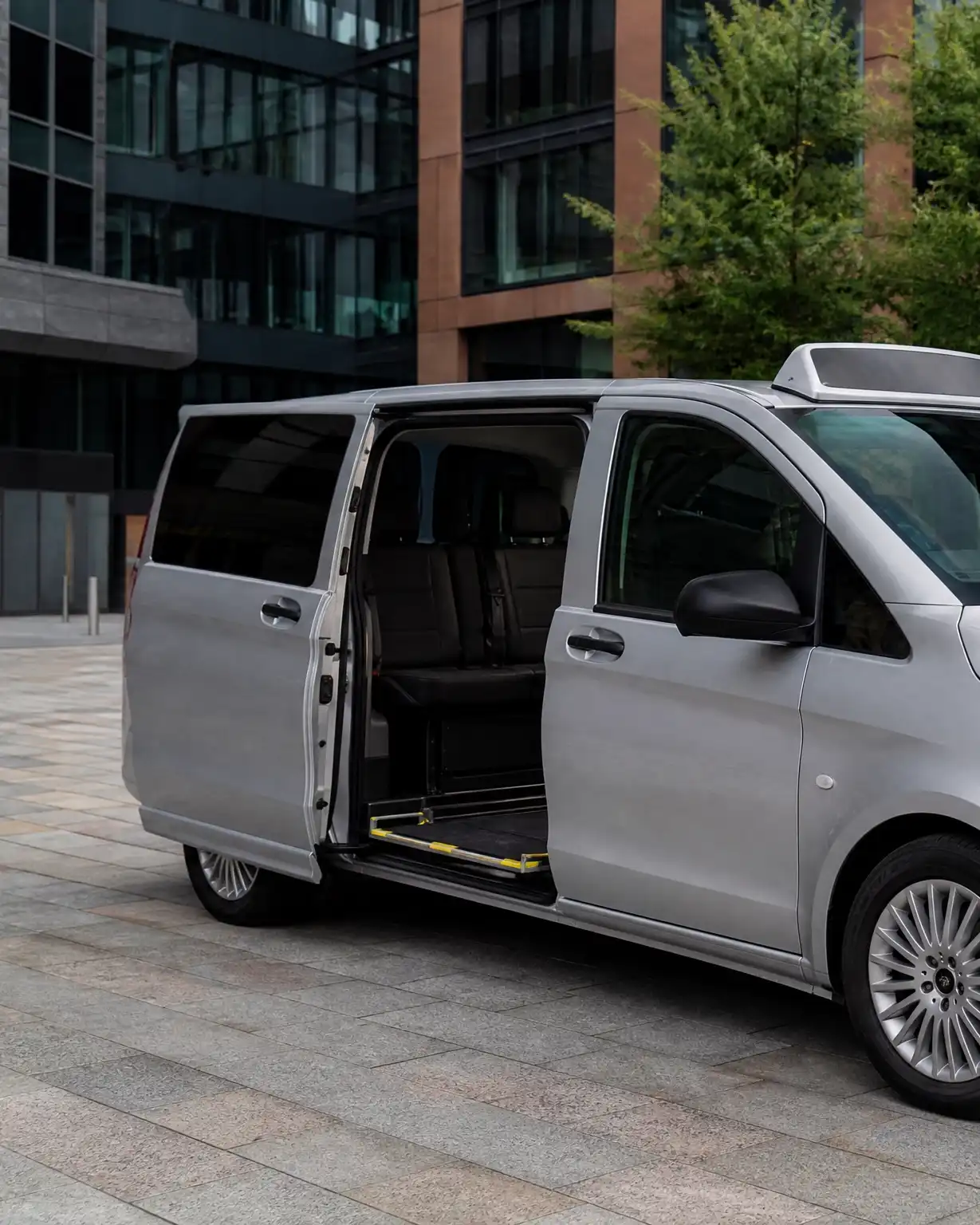
Pre-booked airport pickup and drop-off with fixed pricing, flight tracking, and vehicle planning for passengers and luggage.
Baby Seat TaxisRequest the right child-seat option when a family member or carer travels with a young child.
Hourly HireKeep one driver for appointments, shopping, events, waiting time, or several stops in one booking.
Long-Distance TaxiTravel door to door between cities, hospitals, airports, cruise ports, care homes, and private addresses.
16-Seater MinibusPlan group travel when several carers, family members, luggage, or mobility equipment cannot fit in a smaller vehicle.
School TransportArrange planned school or college journeys with clear pickup, escort, accessibility, and handover instructions.
Book online for a fixed quote or call to discuss the chair, vehicle, companions, luggage, medical equipment, and pickup access. Your journey is pre-booked, the vehicle is confirmed, and the driver receives the accessibility details before pickup.