Manchester Airport on Busy Days: How to Avoid Delays (Timing + Transport Tips)
When Is Manchester Airport Most Busy?
Manchester Airport typically experiences high congestion during predictable periods:
--Early mornings (4:00am–8:00am)
--Friday afternoons
--Sunday evenings
--UK school holidays
--Summer half-term and Easter
--Bank holiday weekends
The early morning window is especially heavy because many short-haul European flights depart between 6:00am and 8:00am. Airlines schedule early departures to maximise aircraft utilisation, which concentrates passengers into narrow time blocks.
Understanding this travel rhythm allows you to plan proactively rather than reactively.
Why Delays Happen on Busy Days
Most delays are caused by a combination of:
--Increased passenger volume
--Road congestion on the M56
--Parking bottlenecks
--Security tray inefficiencies
--Unprepared passengers
It is rarely one single issue. It is the cumulative effect of multiple slowdowns.
When traffic is heavy, even a small incident can add 20–30 minutes to your journey. When security is busy, unprepared travellers slow down tray flow, which impacts everyone behind them.
Preparation removes uncertainty.
How Early Should You Arrive at Manchester Airport on Busy Days?
Short answer:
Arrive at least 2 hours before short-haul flights and 3 hours before long-haul flights. On peak days, add 30–45 minutes of buffer time.
Why buffer time matters?
Traffic around Manchester Airport becomes unpredictable during peak periods. If motorway congestion adds 15 minutes and security queues are 20 minutes longer than expected, your standard arrival window disappears quickly.
Arriving slightly earlier is not about waiting longer — it is about protecting yourself from stress.
Road Traffic: The First Delay Risk
Many travellers focus only on airport queues. In reality, road congestion causes more missed timing margins than security does.
The M56 motorway is the primary access route to Manchester Airport. During commuter overlap or holiday peaks, traffic flow slows significantly.
Common busy-day traffic issues include:
--Junction congestion near airport exits
--Drop-off lane build-up
--Drivers hesitating in short-stay areas
--Vehicles queuing for car parks
If you are driving yourself, you must factor in parking time, unloading luggage and possibly shuttle transfer time.
This is where transport choice becomes critical.
Parking Strategy on Busy Days
Airport parking is one of the most underestimated delay risks.
If you are using long-stay parking:
You must allow time for: --Finding your designated parking zone --Waiting for the shuttle bus --Travelling from the car park to the terminal --Walking from the drop-off point to securityDuring peak periods, shuttle buses may be full or delayed.
If using short-stay parking:
Short-stay options are closer to terminals but fill up quickly. Circling for a space increases stress and wastes time.The safest approach:
Pre-book parking online and arrive earlier than usual. Never rely on drive-up availability during school holidays.Public Transport vs Taxi on Busy Days
Manchester Airport is accessible via train, tram and bus. Public transport can work well — but peak hours create crowding.
Standing on a packed train with luggage before a flight is not ideal. Tram services can slow during commuter overlap.
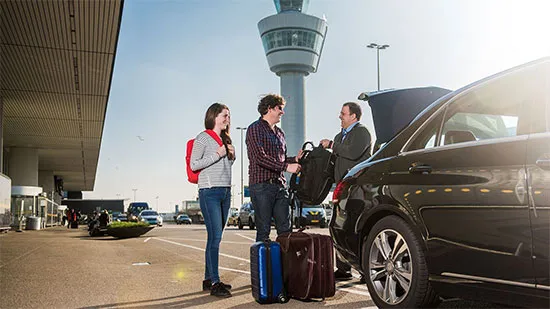
For many travellers, pre-arranged transport such as a Manchester Airport Taxi provides more predictable timing. A professional driver monitors traffic conditions and drops you directly outside the correct terminal entrance, removing parking variables entirely.
On busy travel days, removing one uncertainty significantly reduces stress.
Security on Busy Days: How to Move Faster
Security delays are often caused by unprepared passengers rather than system failure.
To move efficiently:
--Prepare your liquids bag the night before. Each container must be 100ml or less and fit inside a clear resealable bag.
--Keep laptops and large electronics near the top of your bag.
--Remove belts, heavy coats and boots before reaching the tray area.
--Empty reusable water bottles in advance.
Passengers who prepare in advance typically move through security much faster than those reorganising bags at the tray line.
Is Fast Track Worth It on Peak Days?
Fast Track security at Manchester Airport allows access to a priority lane.
It does not change security rules, but it reduces queue time.
During:
--School holidays
--Early morning departures
--Summer peak weeks
Fast Track can significantly shorten waiting time. Booking in advance is recommended.
Terminal Awareness: Avoid Wasting Time
Manchester Airport operates multiple terminals. Turning up at the wrong terminal on a busy day can cost 15–20 minutes.
Airlines occasionally relocate between terminals, especially during infrastructure upgrades.
Always confirm:
--Your airline
--Your terminal
--Check-in opening times
Double-checking this information before leaving home prevents avoidable delays.
Bag Drop and Check-In Efficiency
If travelling with hold luggage, use online check-in whenever possible. Many airlines allow check-in 24–48 hours before departure. Having your boarding pass ready reduces queue time. Self-service bag drop machines are usually quicker than staffed desks. Hand-luggage-only passengers move through the airport significantly faster on peak days.
Travelling With Children on Busy Days
Peak travel periods can overwhelm children due to noise and crowds. Arrive earlier to reduce pressure. Keep snacks and entertainment accessible. Declare baby milk clearly at security. Allow time for toilet breaks before security to avoid needing to re-enter queues. A calm pace improves the entire family experience.
Realistic Busy-Day Timeline Example
Let’s say your short-haul flight departs at 7:30am during summer holidays.
Recommended approach:
--Arrive at airport: 5:00am
--Leave home: Allow for 60–90 minutes including traffic buffer
--Security: Expect 20–40 minutes depending on flow
--Gate arrival: 6:30am–6:45am
This timeline leaves room for minor disruption without panic.
What Causes Peak-Day Stress?
Most airport stress comes from:
--Tight arrival timing
--Road unpredictability
--Parking delays
--Terminal confusion
--Security disorganisation
Notice that only one of these is directly airport-controlled.
The rest are preventable.
How to Monitor Busy-Day Conditions
Before leaving home:
--Check live traffic updates.
--Monitor your airline’s notifications.
--Confirm terminal again.
--Allow contingency time.
--Arriving informed reduces uncertainty.
Subtle Strategy: Reduce Decision-Making on the Day
The more decisions you must make at the airport, the more stress increases.Decide in advance: --Parking location --Security preparation --Transport method --Terminal entrance
Removing last-minute decisions makes busy days manageable.
Final Advice: Turning Busy Days Into Smooth Departures
Manchester Airport on busy days is not chaotic — it is simply operating at full capacity. When you plan transport properly, allow realistic arrival buffers and prepare for security efficiently, the experience becomes structured rather than stressful.
Timing and transport are the two biggest factors under your control.
Planning in advance — whether that means pre-booking parking or arranging a reliable Manchester Airport Taxi — transforms peak travel days from unpredictable to manageable.
Busy airports reward prepared travellers.