How Long Can a Baby Be in a Car Seat? UK Safety Guide for Parents
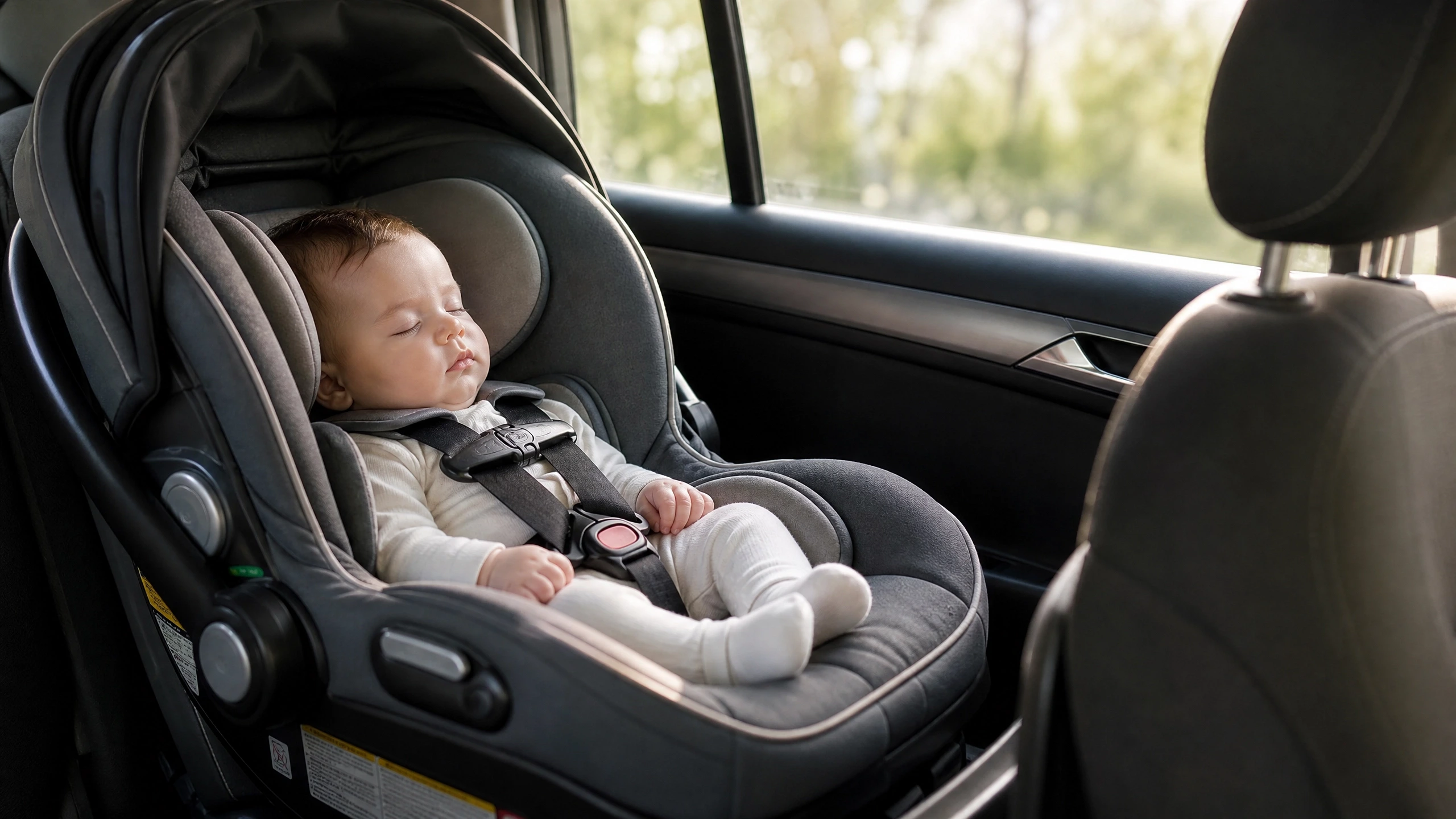
A baby should generally not remain in a car seat for more than two hours at a time. Newborns, premature babies and babies with a low birth weight may need much shorter journeys and more frequent breaks.
The two-hour recommendation does not mean that longer journeys are impossible. It means that you should plan stops, take your baby fully out of the seat and give them time to lie flat, stretch, feed or have a nappy change.
TL;DR
- Most babies should spend no longer than two hours at a time in a car seat.
- For newborns under four weeks, shorter periods of around 30 minutes are often advised.
- Stop sooner if your baby’s head drops forward or their breathing, colour or behaviour changes.
- Remove your baby from the seat when you reach your destination, even if they are asleep.
Car seats are essential safety equipment during a journey. However, they are designed for transport rather than routine sleep, feeding or extended use inside the home.
What is the two-hour car seat rule?
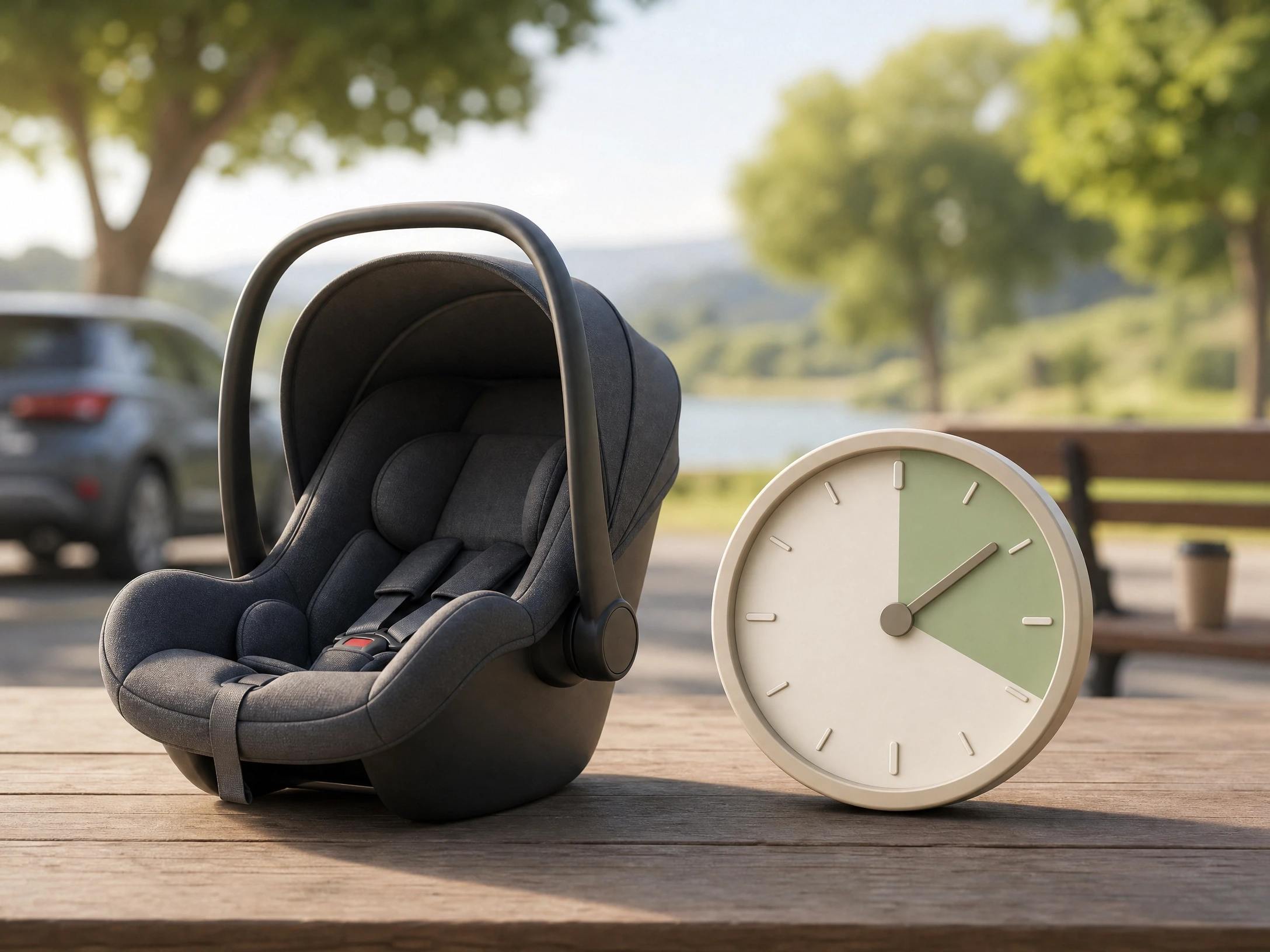
The two-hour car seat rule is a widely accepted safety recommendation that advises parents not to leave a baby in a car seat for more than two hours continuously.
It is not a UK law, and there is no single study proving that exactly two hours is safe while two hours and one minute is unsafe. The recommendation provides a practical maximum that encourages parents and carers to take regular breaks.
Several NHS services, child safety organisations and car seat manufacturers use the two-hour guideline. The advice is especially important for young babies because they have limited head control and may find it difficult to move out of an unsafe position.
The rule means two hours at one time, not automatically two hours during an entire 24-hour period. However, repeated periods in a car seat should still be limited where possible, particularly during the first few months.
Why can prolonged car seat use be risky?
The main concern is the position of the baby’s head, neck and airway. A rear-facing infant seat holds the baby in a semi-reclined position rather than completely flat.
Young babies have relatively heavy heads and weak neck muscles. If the head falls forward and the chin presses towards the chest, the airway may become narrower and breathing may become more difficult.
This is sometimes described as positional asphyxia. It happens when a person’s body position interferes with normal breathing. A baby may not have enough strength or control to lift or reposition their head.
Research using simulated vehicle movement has also observed changes in some babies’ oxygen saturation, breathing rate and heart rate while they were positioned in car seats. The research was small, so it did not establish an exact universal time limit, but it supports the need for caution and regular observation.
Stop the journey and check your baby if:
- Their chin has dropped firmly onto their chest.
- Their head is slumped forward or to one side in an unsupported position.
- Their breathing appears unusual, noisy, difficult or laboured.
- Their skin or lips look unusually pale, grey or blue.
If you are concerned about your baby’s breathing or colour, remove them from the seat when it is safe to stop and seek urgent medical help.
Premature babies, babies with a low birth weight and babies with breathing, heart or muscle conditions may be at greater risk. Ask your maternity team, neonatal team, health visitor or doctor for individual advice before a long journey.
| Baby’s Age | Suggested Approach |
|---|---|
| Newborn, 0 to 4 weeks | Keep journeys as short as practical. Some NHS guidance advises limiting car seat sleep to around 30 minutes for newborns. |
| 3 months | Do not exceed two hours at one time. Stop earlier if the baby slumps, becomes unsettled or needs feeding. |
| 4 months | Continue following the two-hour maximum. Improved head control does not remove the need for breaks. |
| 6 months | The two-hour guidance still applies. Remove the baby from the seat during planned stops. |
| Older baby or toddler | Follow the child seat manufacturer’s instructions and take regular movement, comfort and toilet breaks. |
These are general guidelines rather than individual medical advice. A baby’s health, development, seat position and the type of car seat may all affect what is appropriate.
How long can a newborn be in a car seat?

A newborn should spend as little unnecessary time as possible in a car seat. For babies under four weeks old, some NHS guidance advises limiting sleep in a car seat to around 30 minutes.
This is a cautious recommendation rather than a legal rule. Very young babies are more vulnerable because their neck muscles are weak and they may be unable to correct their position if their head falls forward.
Short, necessary journeys may still be made. Many parents need a suitable infant car seat to bring their baby home from hospital.
For longer journeys, plan several safe stops and have another adult sit near the baby where possible. The passenger can observe the baby’s head position, breathing and comfort, but the driver should still stop before making any adjustment.
How long can a three-month-old be in a car seat?
A three-month-old should generally not remain in a car seat for more than two hours at a time.
At this age, some babies have started to develop better neck control, but their muscles are still immature. Regular breaks remain important, especially if the baby falls asleep or tends to allow their head to drop forward.
How long can a four-month-old be in a car seat?
The same two-hour maximum applies to a four-month-old baby.
Do not assume that reaching four months means the rule has ended. Check the baby’s position regularly, keep the harness correctly adjusted and remove them from the seat during journey breaks.
How long can a six-month-old be in a car seat?
A six-month-old should also be taken out of the car seat at least every two hours.
Many babies have stronger head and upper-body control by six months, but an infant carrier is still a restricted, semi-reclined space. Breaks allow the baby to change position and move freely.
When does the two-hour car seat rule end?
There is no official birthday on which the two-hour rule suddenly ends.
The advice is mainly aimed at babies using rear-facing infant carriers, particularly newborns and young infants. Continue following your seat manufacturer’s guidance for as long as your baby uses the carrier.
When your child moves into a suitable toddler seat and has reliable head and body control, the newborn-specific risks reduce. Even then, children should not remain restrained in one position for an unnecessarily long journey.
Regular stops are useful for everyone in the vehicle, including the driver.
Can a newborn sleep in a car seat?
A newborn may fall asleep in a properly fitted car seat while the vehicle is moving. You do not need to wake the baby immediately simply because they have fallen asleep during a normal journey.
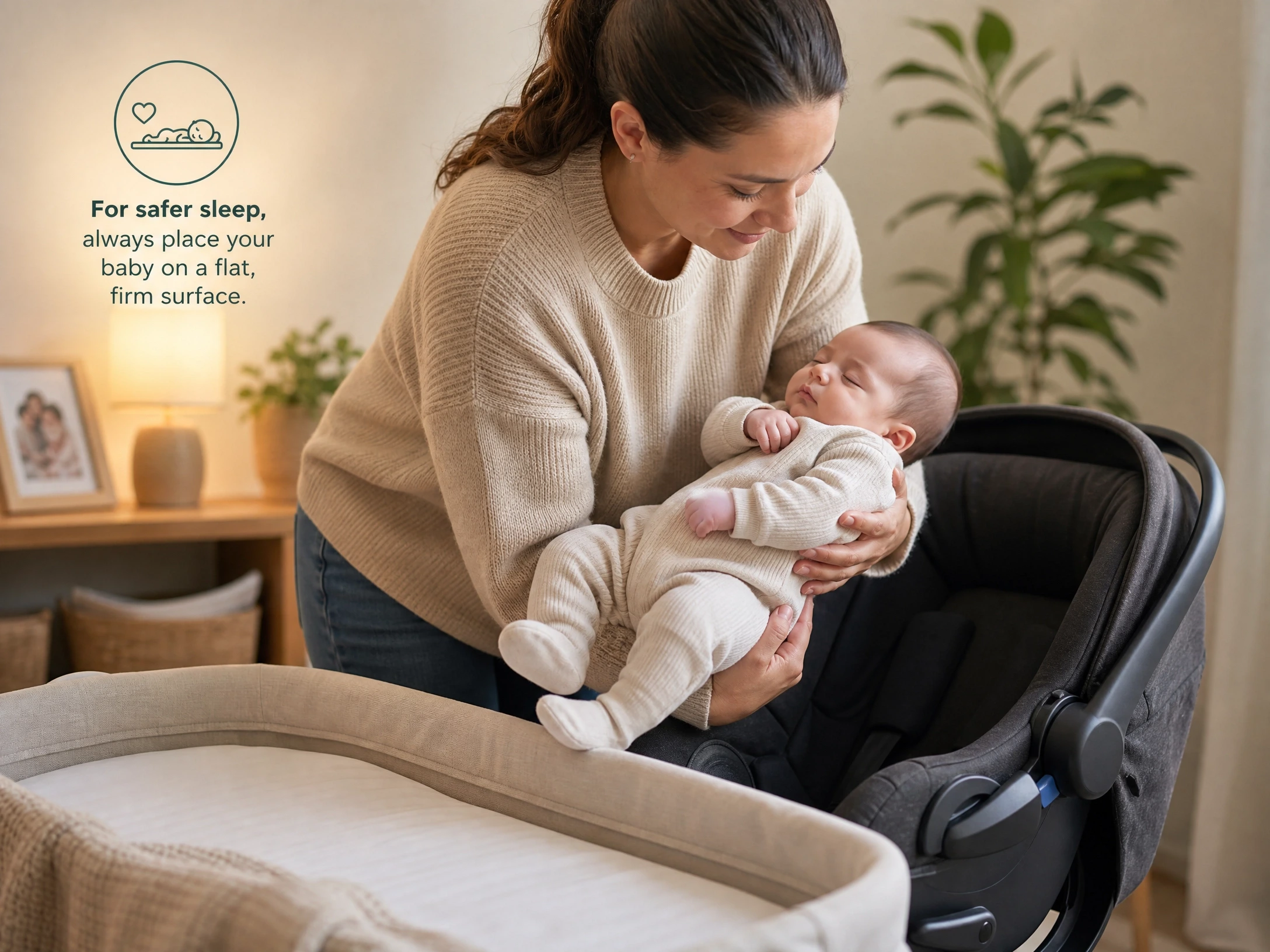
However, a car seat should not become the baby’s regular sleeping place. Once you reach your destination, take the baby out and place them on their back on a clear, firm and flat sleep surface, such as a suitable cot or Moses basket.
Do not bring the infant carrier inside and leave the baby sleeping in it for an extended period. The angled position that protects a baby during a collision is not the recommended position for routine sleep.
Avoid placing the infant carrier on a bed, sofa, table or worktop. It could fall, tip or be pushed from the surface.
When can you travel with a newborn by car?
There is no universal UK rule requiring healthy parents to wait a set number of days before travelling with a newborn.
Keep early journeys short and necessary where possible. Make sure the infant seat is suitable from birth, correctly installed and adjusted for your baby before setting off.
Ask your healthcare team before travelling if your baby:
- Was born prematurely or had a low birth weight.
- Has experienced breathing, heart or muscle problems.
- Required neonatal care or oxygen support.
- Has been given specific positioning or transport advice.
A healthcare professional may recommend shorter periods, extra observation or a car seat assessment before discharge.
How do you put a newborn in a car seat correctly?
Always begin with the instructions supplied with your particular seat. Car seat designs vary, so general advice cannot replace the manufacturer’s fitting guide.
1. Install the seat before placing the baby inside
Fit the seat rear-facing and use the approved seat belt route or compatible ISOFIX base. Check every indicator and confirm that the support leg or top tether is positioned correctly where required.
Never place a rear-facing baby seat in front of an active passenger airbag. The force of an airbag could cause severe injury.
2. Position the baby’s body fully against the seat
Place the baby’s bottom and back against the seat. Use the correct newborn insert only if it came with the seat or is specifically approved by its manufacturer.
Check that the seat is set at the approved newborn recline angle. Do not add cushions, rolled blankets or head supports behind the baby unless the manufacturer instructs you to do so.
3. Adjust and tighten the harness
For a rear-facing seat, the shoulder straps should usually begin level with or slightly below the baby’s shoulders. Remove twists and fasten the buckle securely.
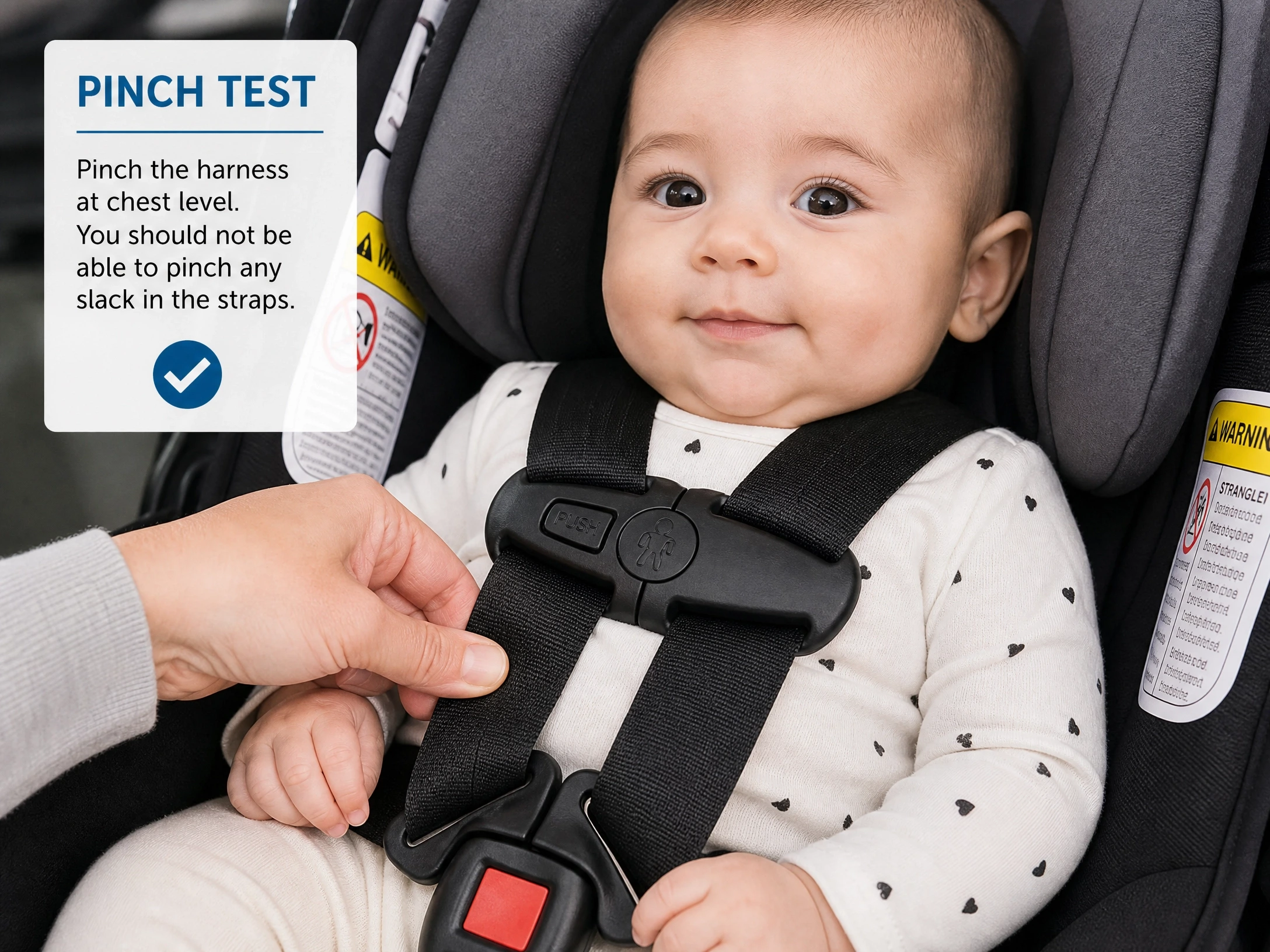
Pull out the slack until the harness fits closely. You should normally be able to place only one or two fingers between the harness and the baby’s chest.
4. Check the baby’s head and airway
The baby’s head should be supported without being pushed forward. Make sure there is space between the chin and chest and that the nose and mouth remain clear.
UK seats do not normally require a separate chest clip. Do not add an aftermarket clip, harness cover, insert or accessory unless it is approved for that exact seat.
Can infants wear coats in car seats?
Babies and children should not wear thick coats, padded jackets or snowsuits underneath a car seat harness.
Thick clothing creates hidden space between the harness and the child’s body. During a collision, the padding may compress and leave the harness too loose to hold the child securely.
Dress your baby in thin, close-fitting layers. Once the harness is fastened, place a blanket over the baby without covering their face.
You can also put the child’s coat on backwards over the secured harness. Remove blankets or extra layers if the vehicle becomes warm, as babies can overheat more easily than adults.
What are the UK car seat laws?
In an ordinary car or van, children must normally use an appropriate child restraint until they are 12 years old or 135 centimetres tall, whichever comes first.
The driver is responsible for making sure children under 14 use the correct restraint or seat belt.
| Child’s age or size | General UK requirement |
|---|---|
| Under 3 years | Must normally use an appropriate child car seat in the front or rear of a car. |
| 3 years to 12 years, or under 135cm | Must normally use an appropriate child car seat. |
| 12 years or older, or at least 135cm | Must wear an adult seat belt where one is fitted. |
| Height-based R129 seat | Must remain rear-facing until the child is over 15 months old. |
| Older weight-based R44 seat | Must be used according to the approved weight group and manufacturer’s instructions. |
Keeping a child rear-facing beyond the minimum requirement is generally considered safer, provided the child remains within the seat’s height and weight limits.
A rear-facing seat must not be used on a front passenger seat with an active airbag. Move the child seat to the rear or deactivate the airbag according to the vehicle manufacturer’s instructions.
Do babies legally need car seats in taxis?
UK law contains an exception for licensed taxis and minicabs when the correct child seat is not provided.
A child under three may travel without a child seat or seat belt, but only on a rear seat. A child aged three or older may travel on a rear seat using an adult seat belt if the correct child seat is unavailable.
This is a legal exception, not a statement that unrestrained travel is equally safe. Parents who want a suitable seat should pre-book a family transfer and confirm the child’s age, height and weight.
Transfers 247 provides rear-facing infant seats, forward-facing toddler seats and booster options on request for airport, local and long-distance journeys.
Does a five-year-old need a car seat in the UK?
Yes, most five-year-olds still need an appropriate child car seat.
A child normally requires a car seat until reaching 12 years of age or 135cm in height, whichever happens first. At five, this will usually mean a forward-facing seat or a high-backed booster that suits the child’s height and weight.
An adult seat belt should sit across the shoulder and chest, not the neck, and low across the pelvis rather than the stomach.
When should you change an infant car seat?
Change the seat when your child reaches its stated height or weight limit, not simply because they have reached a certain birthday.
Check the label and manual for the exact limits. Depending on the model, signs that the seat may have been outgrown include the child exceeding its maximum height or weight, the harness no longer fitting correctly or the head reaching the limit stated by the manufacturer.
Do not rush to move a baby into a forward-facing seat. A larger rear-facing seat may allow the child to remain rear-facing for several more years.
You should also stop using a seat if:
- It has been involved in a collision and replacement is advised.
- Parts are missing, cracked, damaged or no longer work correctly.
- You cannot confirm its history or obtain its fitting instructions.
- It has passed the manufacturer’s stated usable life.
Car seats do not all have the same service life. Check the date label, manual or manufacturer rather than relying on one general expiry period.
What is ISOFIX?
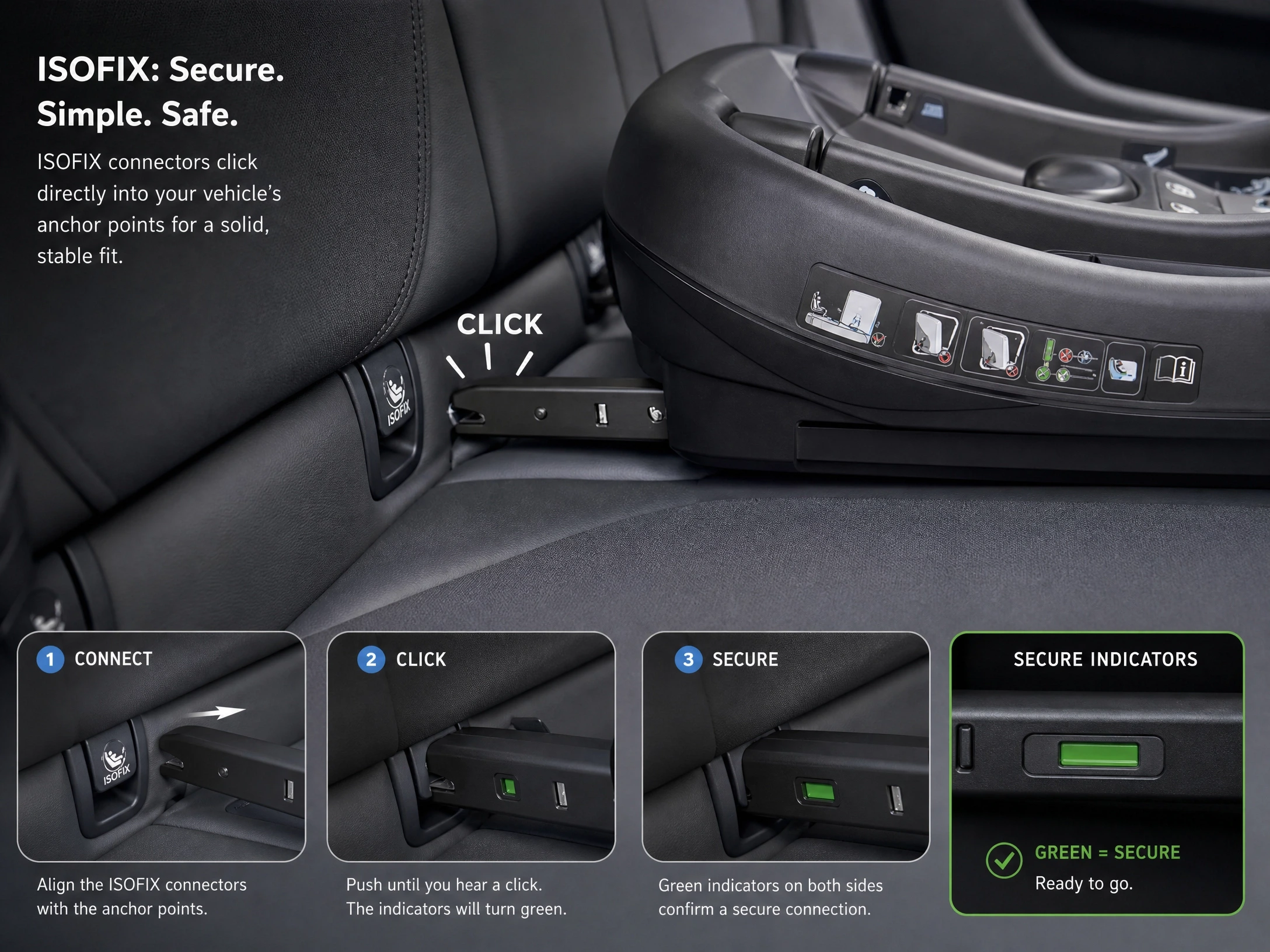
ISOFIX is a fitting system that connects a compatible child seat or base directly to fixed anchor points in the vehicle.
It removes the need to route the vehicle seat belt around some types of car seat. This can make installation more consistent and reduce common fitting errors.
An ISOFIX seat may also use a support leg or top tether to limit movement during a collision. A green indicator usually shows when each connection is locked, but you should still perform the checks described in the manual.
ISOFIX does not mean that every seat fits every vehicle. Check the approved vehicle list or compatibility guide before using a particular combination.
What is R129 or i-Size?
UN Regulation No. 129, commonly called R129 or i-Size, is the newer child restraint safety standard.
R129 seats are selected primarily according to a child’s height. They include side-impact testing and require rear-facing travel until the child is over 15 months old.
R44 is the older weight-based approval system. Approved R44 seats may still be recognised for use in the UK when they remain suitable, undamaged and within the manufacturer’s instructions.
For a new purchase or supplied transfer seat, R129 is the modern standard to look for. Check the approval label and make sure the seat is suitable for both the child and vehicle.
How can you make a long car journey safer for a baby?
A journey lasting more than two hours should be divided into manageable sections. Add break time to your schedule rather than planning only around the distance shown by a sat-nav.
During each proper stop, remove the baby from the car seat. Hold them, change their position and allow them to lie flat in a safe place.
- Stop at least every two hours and sooner for a newborn.
- Feed the baby only after the vehicle has stopped safely.
- Keep the vehicle at a comfortable temperature.
- Share driving and monitoring responsibilities where possible.
Never remove a baby from the seat or loosen the harness while the vehicle is moving. Even if the baby is crying, continue until the driver can stop safely. Avoid placing toys, bottles or hard objects around the infant seat. Loose items can become dangerous during sudden braking or a collision.
Booking an airport transfer with a baby car seat
Travelling to an airport with a baby can involve suitcases, a pushchair, feeding equipment and an early departure. A pre-booked vehicle with an appropriate child seat removes one major source of uncertainty.
When booking a family transfer, provide accurate information rather than asking only for a “baby seat”.
- Give the child’s age, approximate height and weight.
- State how many infant, toddler or booster seats are required.
- Include the number of suitcases and whether you have a pushchair.
- Confirm any special medical, mobility or positioning needs in advance.
Transfers 247 offers baby and child seats on request for airport transfers and other pre-booked journeys, including services in London, Manchester and other UK locations.
Advance booking gives the operator more time to prepare the correct seat and a vehicle with enough luggage space.